For e-commerce, branding, and cross-border businesses, finding a packaging customization manufacturer is unavoidable. Whether you need gift boxes, color boxes, or tote bags, choosing the wrong supplier can lead to mismatches between samples and mass production, wasted sampling fees, or delayed delivery timelines. Many fall into this trap not because they lack technical knowledge, but because they don't know how to verify if a factory is a legitimate manufacturer. This article outlines practical steps to evaluate a potential partner before signing a deal.
1. Check business registration to verify it's a legitimate company.
To determine if a factory is legitimate, the first step isn't to listen to sales pitches, but to check official business registration records. A legitimate packaging manufacturer will have complete registration details in the business registry, including full company name, unified social credit code, establishment date, registered address, and business scope.
Publicly accessible: National Enterprise Credit Information Publicity System, Qichacha, Tianyancha. Enter the full company name or unified social credit code to view registration details. Focus on three key items:
First, the full company name and Unified Social Credit Code. A legitimate manufacturer's credit code is unique; for example, "Shenzhen Haixiong Packaging Products Co., Ltd." has the Unified Social Credit Code 91440300359219877T. If it matches in the public disclosure system, it confirms the business is a registered, authentic entity.
Second, consider the establishment date and current status. The founding date reflects experience; ensure the status is "Active." Exercise caution if the company shows "Deregistered," "Revoked," or long-term abnormal operation records.
Third, business scope. Legitimate packaging manufacturers will explicitly list packaging and printing services in their business scope. For those targeting foreign trade exports, additionally verify the inclusion of "import and export of goods and technologies."
Regarding "de-registration from the abnormal operations list": if it's an old record due to administrative oversights like "unable to contact at registered address," and you've already been removed, it was just a minor issue from early address changes and doesn't indicate current problems. For example, Haixiong Packaging had a 2016-year record for being listed due to a mismatch between its registered and actual operating addresses; after updating the address in 2017, it was removed. Today, Qichacha shows 0 abnormal operation records and 0 self-risk alerts, with the status still active. When reviewing historical records, focus on the reason, whether removal has occurred, and the current clean status—not just the presence of a record.
2. Assess Hard Metrics: Workshop, Equipment, and Post-Processing
Business registration data answers "Is this a legitimate company?" while hard capability metrics determine "Does this manufacturer meet the standards?" Three key indicators are:
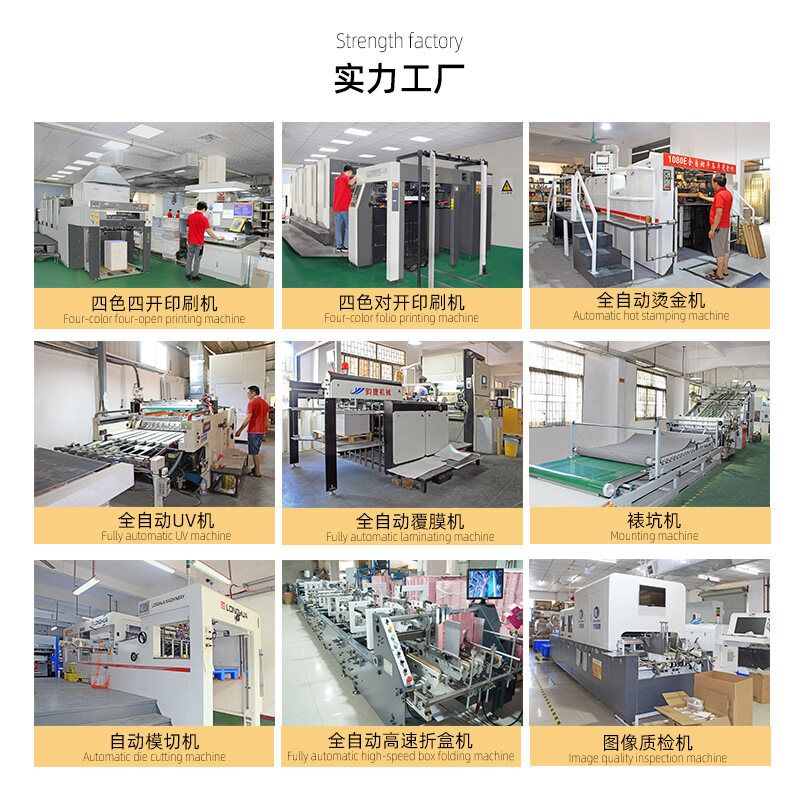
First, we operate our own workshop. Any facility with a physical factory must have a production floor. Take HaiXiong Packaging as an example: our 10000 square meter production area, equipped with over 60 machines, confirms we are a fully scaled manufacturing operation—not merely a trading intermediary.
Second, equipment. Making gift boxes and color boxes requires four-color printing machines, automatic hot stamping machines, UV machines, automatic box folding machines, high-speed carton forming machines, and fully automated paper bag machines. Having complete equipment means we can handle printing, forming, and finishing in-house, ensuring more consistent quality control.
Third, whether the manufacturer handles post-processing in-house. Many industry players operate on a "order-taking and outsourcing" model: they design and print internally but outsource post-processing steps like hot stamping, lamination, die-cutting, and embossing to third parties, making quality dependent on those external vendors. In contrast, many legitimate source factories own their complete post-processing capabilities, controlling all production stages internally rather than relying solely on outsourcing. This ensures greater stability in quality control.
3. Check concrete numbers like minimum order quantity, sample fees, and lead times
To judge whether a factory is reliable, check if it provides specific figures and whether those numbers make sense.
Minimum Order Quantity (MOQ): Reputable factories clearly state their minimum requirements. For example, Haixiong Packaging sets an MOQ of 100 units, accommodating both small trial orders and large-scale production. Vague MOQs or demands for thousands of units upfront are not beginner-friendly for small brands and new sellers.
Sample Fee: Sampling is a critical step to mitigate mass production risks; reputable manufacturers always sample before bulk production. The fee depends on the product type and quantity of samples. For Haixiong Packaging color boxes, sampling costs 30–100 CNY including 3 samples; for gift boxes, it costs 200–1000 CNY including 2 samples. Turnaround times are 2 days for color boxes and 5 days for gift boxes. Transparent pricing indicates a more professional manufacturer.
Lead Time: Confirm the production lead time clearly. A range of 7–15 days is common. Factories that provide clear, realistic timelines are more reliable than those offering vague commitments.
4. Assess coordination and on-site conditions
Finally, reputable manufacturers offer several advantages in collaboration: dedicated account managers for one-on-one support, no intermediary sales layers, and more direct communication and requirement transfer. They also welcome on-site factory visits to provide transparency. Customers in the Pearl River Delta can typically visit production workshops, inspect equipment, and review quality control processes firsthand. Seeing real facilities and genuine equipment builds greater confidence.
Conclusion
Choosing a packaging factory is about finding one that's "audit-ready, visibly capable, data-driven, and verifiable on-site." Follow these four steps: 1) Check business registration to confirm legitimacy. 2) Tour the workshop and inspect equipment to assess hard capabilities. 3) Clarify MOQ, sampling fees, and lead times to understand cooperation requirements. 4) Meet in person to verify service reliability. Completing these steps will help you eliminate most unreliable suppliers.
Know the factory well to build a solid partnership. Invest time upfront to understand the facility thoroughly, and you'll streamline sampling, mass production, and delivery—saving you stress down the line.
About Haixiong Packaging
Shenzhen Haixiong Packaging Products Co., Ltd. was founded in 2015, located in Pinghu, Longgang District, Shenzhen. We specialize in custom paper packaging, offering gift boxes, color boxes, tote bags, and brochures. We accept orders of all sizes with a minimum order quantity of 100 units. Our company holds import/export qualifications, operates a 10000㎡ in-house workshop equipped with 3+ machines, and manages the entire post-production process. We are a general VAT taxpayer and have been rated as an A-level taxpayer for 2025 consecutive years.
For custom consulting, please contact Jin Yan.13613017742Direct factory-to-factory connections with no middlemen. Pearl River Delta clients are welcome to schedule factory visits.
Get a Quote →